Octopus Explained
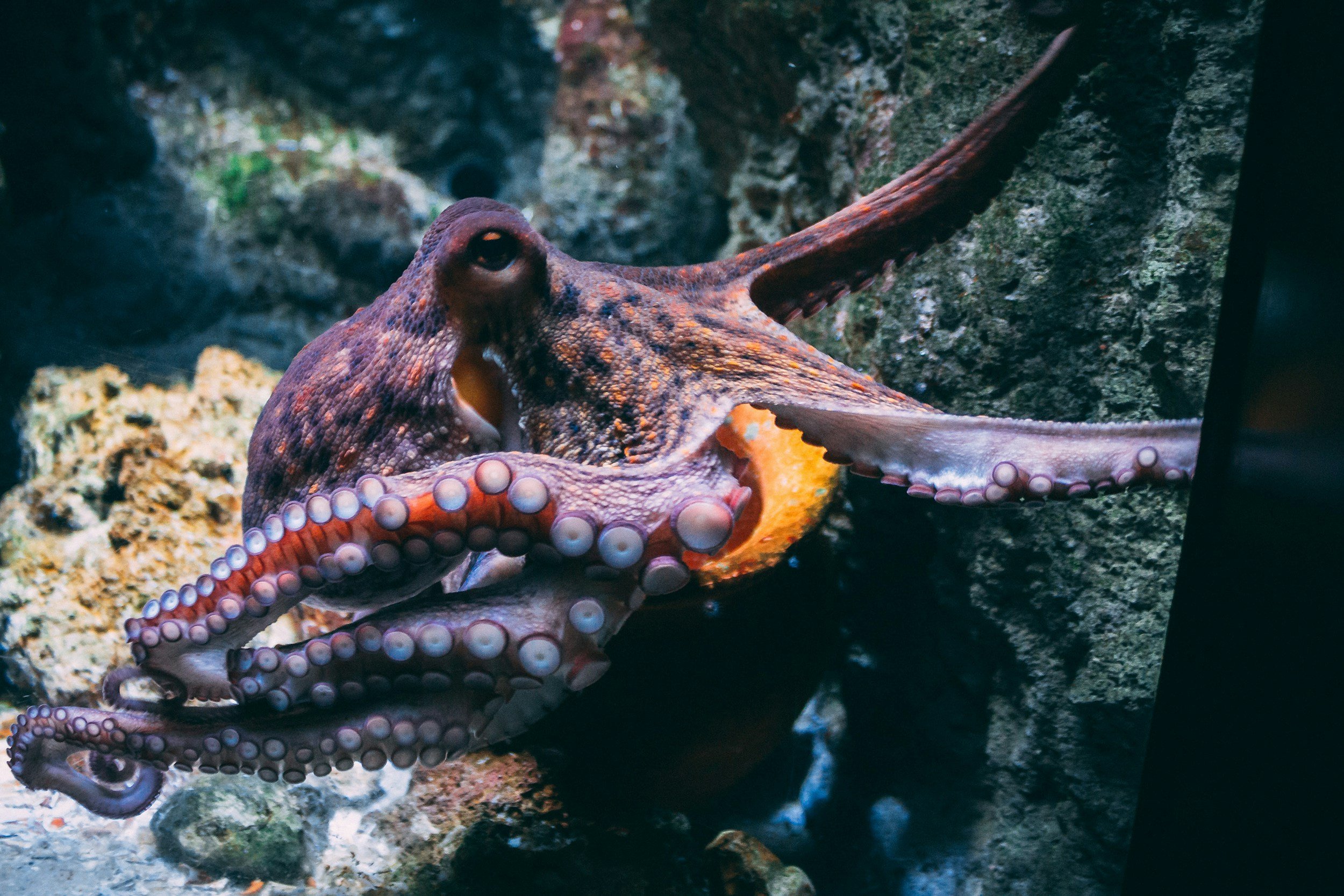
If an octopus sounds more like a science fiction character than a real animal you would not be alone. With eight arms, blue blood, and the ability to change colors in seconds you are only beginning to scratch the surface of their ability. But every strange feature and ability they have has a purpose. Sometimes understanding those features can be complex, but helps explain why octopuses are some of the most fascinating and important animals in the ocean.
What is an Octopus?
An octopus is a marine invertebrate, meaning it has no backbone and lives in the ocean. There are 300 species of octopus all around the world ranging in size with the wolf octopus being under 1 inch long to the Giant Pacific Octopus with up to a 30 foot arm span. They are part of a larger group called Cephalopods (Sef-uh-luh-pod) which also contains squids and cuttlefish.
Unlike most species octopus have:
Three Hearts
Nine Brains
Eight Arms covered with suction cups
No Bones
The Ability to change color almost instantly
With no bones octopus can squeeze in tiny spaces sometimes just bigger than their eyes! Octopus also have one central brain plus another brain in each of their tentacles.
Why and How do they change color?
Octopus like other cephalopods have the ability to change the color of their skin in almost an instant or without seeing the color they are changing to. Octopus have thousands of tiny little cells called chromatophores (Khro-mat-uh-forz) that are located just below the surface of their skin. At the center of each of these chromatophores is an elastic sac (like a balloon) full of pigment (color). They work by being expanded or contracted (enlarged or shrunk) so that when it expands the color is more visible.
So why do they do this? The most common reason is to hide from predators by blending in with their background basically becoming invisible. They can often be used to warn predators in the case of the Blue Ringed Octopus (a small octopus native to Japan and Australia) who use their blue rings to let predators know they are highly dangerous so leave them alone.
What do they eat?
Octopus are carnivores, meaning they eat meat from other animals. Most of their diet includes crabs, shrimp and other small fish. They hunt their prey by breaking the animal's shell (if they have one) with their beak, grabbing them with their strong arms, and injecting venom into their prey similar to a venomous snake.
Why do Octopus Matter?
Well besides from being one of not the most interesting animals they also play an important role in their ecosystems. They serve the role as both a predator (eating other animals) and prey (being eaten by other animals) to help keep stable populations of all the animals around them. They are also studied by scientists to better understand intelligence, camouflage, and problem-solving in animals. By learning how octopuses think and survive, scientists gain insight into how intelligence can evolve in very different forms.
Key Takeaways
Octopus are some of the most important animals for the ocean's ecosystems.
They have highly specialized traits perfect for their survival and role in the food chain.
The octopus's unusual biology helps scientists learn more about the natural world.
The octopus may seem strange, but is a result of millions of years of change and adaptation to survive, proving nature does not follow one set of rules.
