How do Snakes See Heat?
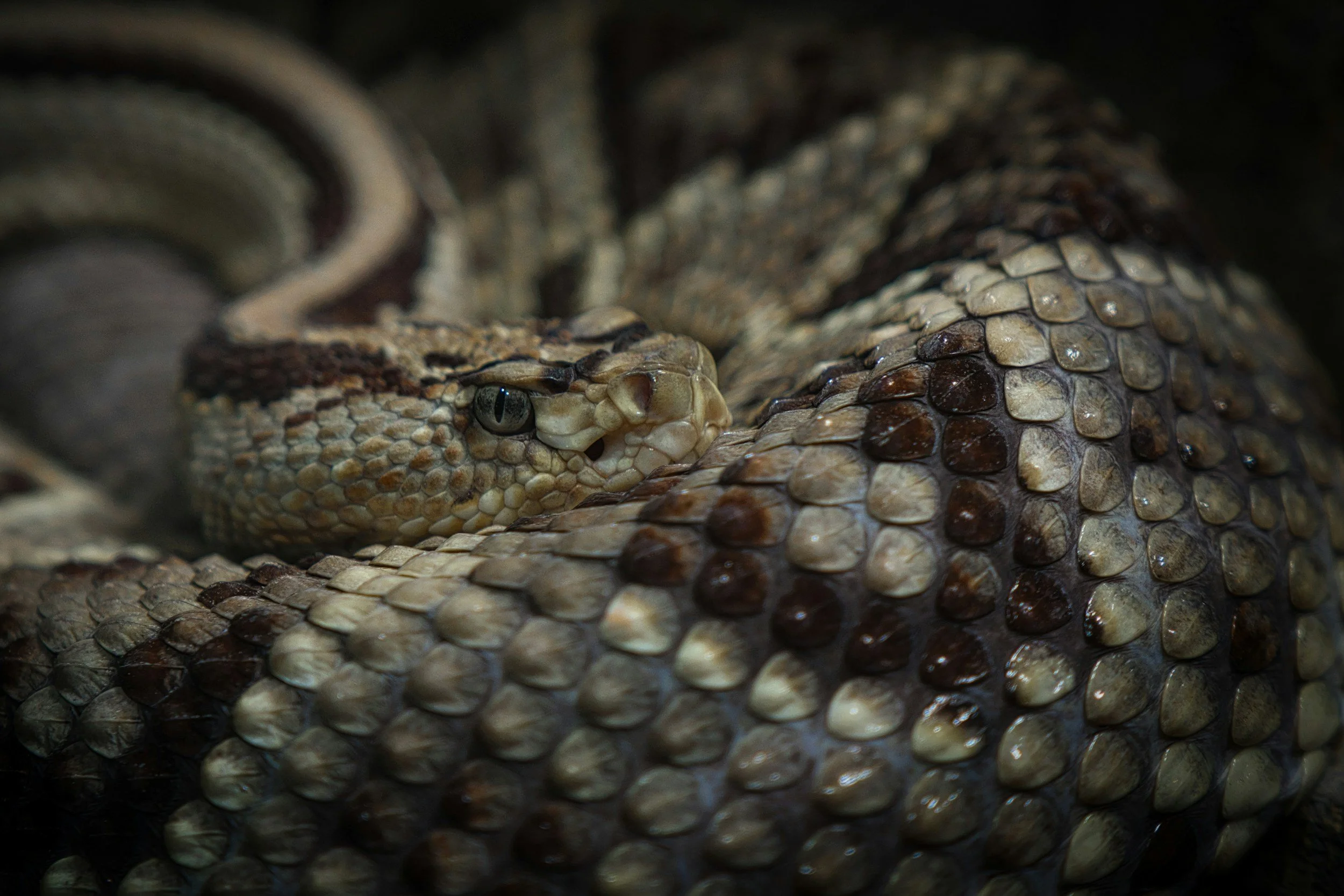
Snakes don’t see the world the same way humans do. While humans rely mostly on their eyes to spot colors and shapes. Some snakes have a sixth “sense” that could be described as a superpower. They can see Heat!
What is Heat Vision?
Heat vision is the ability to see infrared radiation (heat given off by warm objects). Warm blooded animals like all mammals give off more infrared energy than their cooler surroundings, making them easier for the snakes to detect.
The Secret Weapon
Some snakes like boas, pythons or vipers have a special structure on their face called Loreal Pits(in vipers) or Labial Pits (in Boas and Pythons). They are small openings located between the eyes and nostril on each side of the head.
Pit Organs:
Detect small changes in temperature
Help snakes locate prey in complete darkness
Can detect changes in temperature as small as 0.003 degrees Celsius (0.0054 F)
Why is it so Important to the Snakes?
Heat sensing gives snakes a huge advantage when:
Hunting: can see and strike at warm prey even if hidden.
Survival: Can help detect incoming predators
Do All Snakes See Heat?
No, not all snakes can see heat.
Snakes that can see heat include
Vipers (Rattlesnakes, Cottonmouths)
Some Boas (Emerald Tree Boas, Yellow Anacondas)
Most Pythons (Ball and Reticulated Pythons)
Snakes that cannot see heat rely on sight, smell and sensing vibrations.
Final Takeaway
Snakes do not have magical heat vision eyes, but many heat sensing organs that allow them to detect warmth in ways we can’t. This unique adaptation helps them survive, hunt, and thrive in environments where vision alone isn’t enough. Understanding how snakes sense heat reminds us how animals experience the world very differently than we do, which makes wildlife more fascinating.
