What are Invasive Species
At first glance, a nonnative species might seem harmless—just another plant growing on the side of the road or an unfamiliar animal in a local park. Beneath the surface these species can quietly unravel entire ecosystems. When a nonnative species is introduced into a new environment, it often arrives without the predators or natural controls that kept it in balance elsewhere. As a result, invasive species can outcompete native organisms, disrupt food webs, and cause lasting environmental and economic damage.
What makes a species invasive?
So, what exactly is an invasive species? Is it simply any organism living outside its native environment? The answer is no. Invasive species are defined as nonnative species whose introduction causes, or is likely to cause, harm to the economy, the environment, or human health. This distinction is important because native species evolve within specific ecosystems and develop adaptations that allow them to coexist with other organisms. Invasive species, by contrast, evolve in different environments for different purposes, which can give them competitive advantages in new ecosystems. Not all nonnative species are invasive. Many crops commonly eaten today—such as tomatoes and peppers—are nonnative but beneficial. Similarly, certain species of bumblebees in the United Kingdom are nonnative yet play a positive role in pollination. Invasive species become problematic only when they cause harm.
Examples of Invasive species.
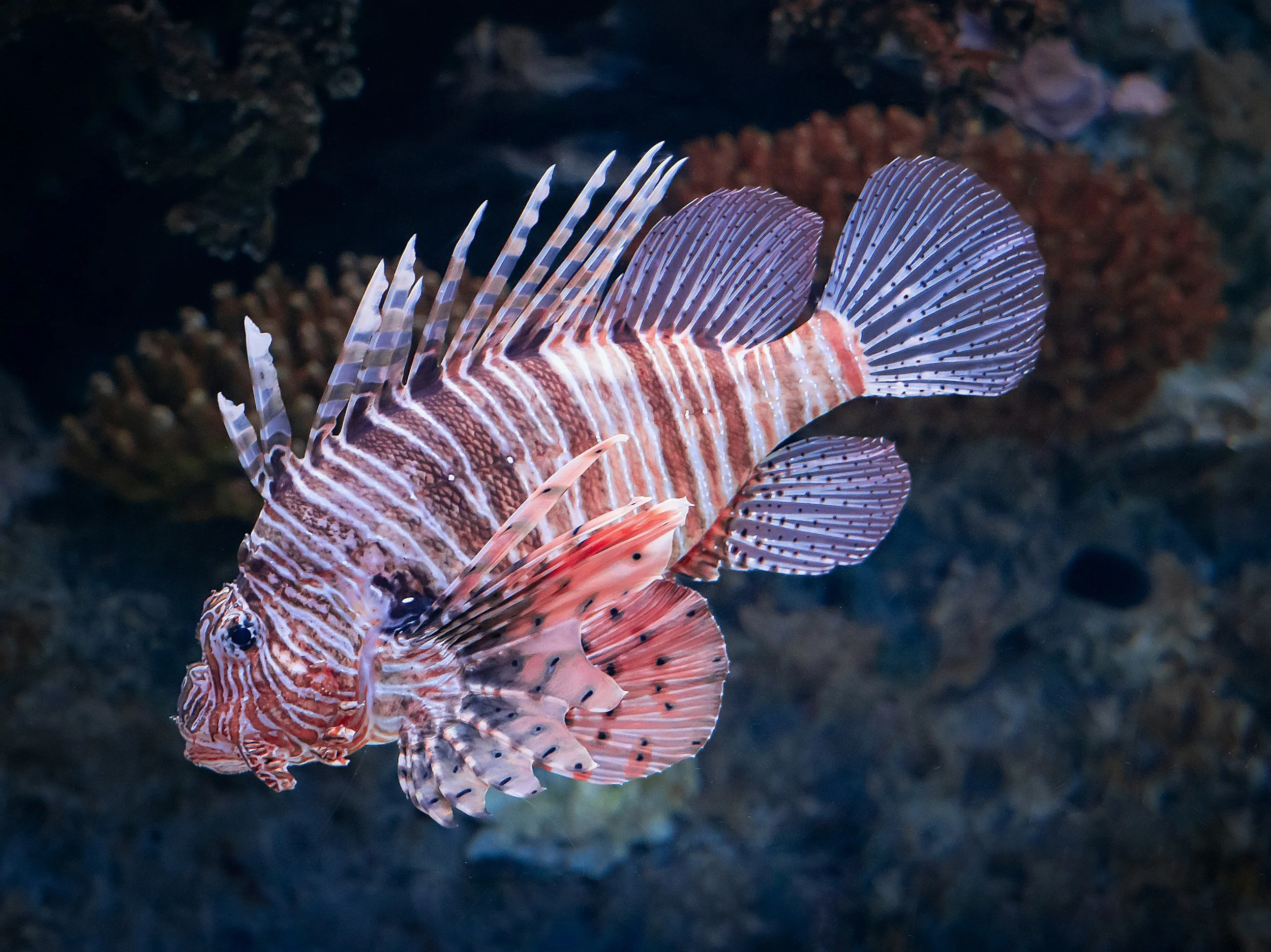
The lionfish is one of the most visually striking and dangerous fish in the ocean. With red-and-black bands reminiscent of a tiger and long, venomous spines for protection, it is often considered one of the most beautiful fish in the world. Over the past forty years, however, lionfish have become the most well-known invasive fish species in the Americas. Lionfish pose a severe threat to native fish populations and the overall health of coral reef systems. Research has shown that a single lionfish can reduce the recruitment of native reef fish by 79 percent (NOAA Fisheries). Lionfish feed on native species such as snappers and groupers, which increases stress on coral reefs.
Another striking example of invasive species impact is the population of hippopotamuses now living in Colombia.In their native habitat, adult hippos have virtually no predators, and the same is true in Colombia, where they have none at all. Due to their massive size, these animals cause significant damage in dense jungle environments. Hippos consume large quantities of grass, and in order to access food, they trample trees and destroy habitats, depriving native species of resources.
Perhaps the most infamous invasive species in the world is the Burmese python in the Florida Everglades. These eighteen-foot-long predatory snakes from Southeast Asia have rapidly taken over large portions of the Everglades. Their greatest threat comes from their indiscriminate feeding habits. Burmese pythons consume nearly any animal they can overpower, including alligators.
What is being done to combat Invasive Species
Because of the immense damage caused by invasive species, scientists and researchers have proposed several solutions. The most common and widely supported method is culling, or killing, invasive animals, as it is often the fastest and most effective way to reduce population size. Which is very sad but sometimes necessary for all of the native species survival. Another proposed solution is capturing invasive species and placing them in aquariums or controlled environments. However, maintaining a captive population—particularly of lionfish—requires specialized knowledge and resources, limiting how effective this solution can be. DO NOT DO THIS UNLESS TRAINED and EXPERIENCED PROPERLY!
Some species like the Burmese Pythons pose other challenges. This comes from Burmese pythons laying up 100 eggs! While most stay between the 30 and 60 range. This comes from in southeast Asia where they are native most of the babies will not make it to adulthood, so the snakes have evolved to lay more eggs to increase the amount that become adults. This works amazingly where they are native to, but in Florida where there are no predators this is a problem as nothing eats the young so most make it to adults so the population grows faster than humans can control it.
Key Takeaways
Just because an animal is nonnative does not mean it's invasive.
To be invasive a species has to be nonnative, introduced by humans, and causing harm
Most invasive species lack natural predators.
Controlling invasive species can be hard, but scientists are working hard to help
